




 Arts & Culture
Traditional Arts and Heritage Experiences Across the UAE
The United Arab Emirates grew rapidly from a quiet pearl-diving spot into a global metropolis. Yet, the old ways did not disappear. Visitors who want to look past the tall glass towers can find deep historical roots preserved in Traditional Arts and Heritage Experiences Across the UAE.
Taking part in these living customs offers a clear window into local life. It reveals the core values of hospitality, hard work, and community that still shape the nation today. These customs are not museum relics but living habits.
This guide highlights key ways to locate Traditional Arts and Heritage Experiences Across the UAE. Old life on the peninsula depended heavily on the desert and the sea. Creative historical centers in Abu Dhabi and Dubai offer detailed displays showing early Bedouin life, sea travel, and ancient trade routes.
The Al Shindagha Museum in Dubai serves as a key site to study these developments. Guests can walk through displays that show how a small pearl-fishing port grew into a global city. The displays highlight the clever solutions used by early coastal families.
- Al Shindagha Museum: Focuses on sea travel history and the process of making traditional perfumes.
- Qasr Al Hosn: This is the oldest standing stone building in Abu Dhabi, showing royal history and governance.
- Heritage Village Abu Dhabi: Offers live displays of early farming, weaving, and metalwork.
Architectural Marvels and Traditional Arts and Heritage Experiences Across the UAE
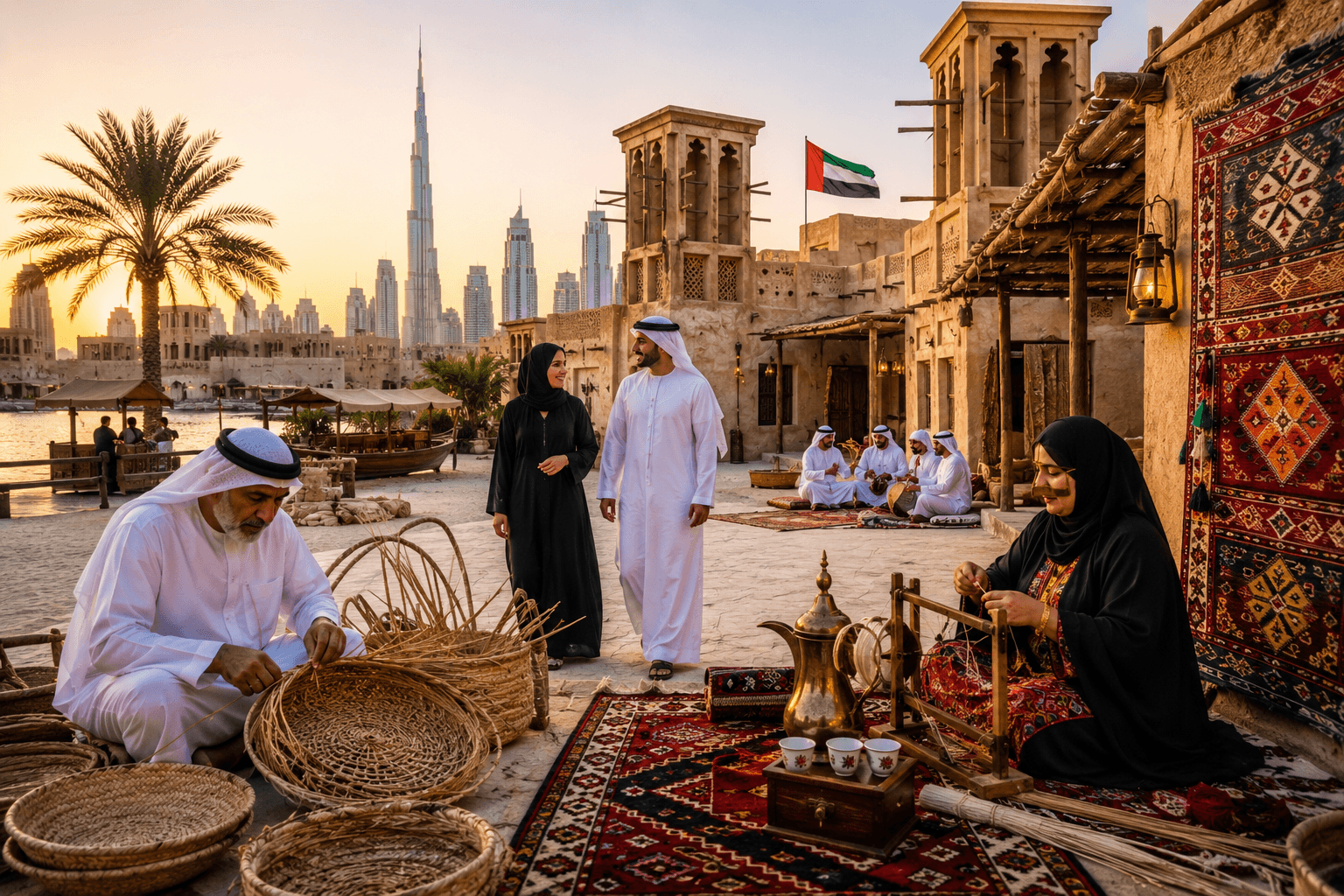
Local builders understood how to keep buildings cool without electricity. They built the barjeel, or wind tower, which caught high breezes and funneled cool air down into homes. This simple invention shows how smart early builders were.
Walking through old neighborhoods lets people see how builders used coral stone, gypsum, and palm leaves. These basic materials lasted a long time and kept rooms cool in the hot summer. Builders gathered everything they needed from the local sea and desert.
New preservation work keeps these old buildings open to everyone. Visiting these physical sites is necessary if you want to understand Traditional Arts and Heritage Experiences Across the UAE. Saving these spaces keeps the memory of early families alive.
Performance Arts and Traditional Arts and Heritage Experiences Across the UAE
Music and dance served as the main ways to tell stories and bring people together. The Al-Ayyala dance, inscribed on the UNESCO Representative List of the Intangible Cultural Heritage of Humanity in 2014, features two rows of men facing each other. They chant poetry to loud drumbeats to celebrate victories or greet guests.
This dance represents pride and unity. Another vocal style is Al-Taghrooda, which was inscribed by UNESCO in 2012 as poetry sung during long camel rides. The rhythmic sounds kept travelers awake and cheerful during long trips across the sand.
- Al-Ayyala: A patterned group dance that mimics a battle using thin bamboo sticks.
- Al-Harbiya: A lively folk dance with strong vocal chanting and physical movement but no musical instruments.
- Al-Yowlah: An old martial art where performers spin and toss replica rifles high in the air.
Craftsmanship and Traditional Arts and Heritage Experiences Across the UAE
Handmade goods show how early makers used whatever they could find. Talli embroidery, officially recognized by UNESCO in 2022, uses shiny and cotton threads to decorate the collars of women’s dresses. Making these designs takes days of quiet patience.
Sadu weaving, inscribed by UNESCO in 2011, uses sheep wool and camel hair to make geometric patterns on tents and rugs. Bedouin women practiced this craft to build warm shelters in the harsh desert. The patterns tell stories about tribal names and local animals.
Joining local workshops lets travelers learn these skills directly from master makers. Seeing these crafts up close is a key part of Traditional Arts and Heritage Experiences Across the UAE. Buying from local makers helps keep these old skills from dying out.
- Talli: Complex sewing using gold and silver threads to decorate fine clothing.
- Al-Sadu: Patterned weaving known worldwide for its historical value.
- Khoos: The art of weaving dry palm leaves into baskets and food covers.
Summary of Emirati Heritage Crafts
| Craft Name | Primary Materials Used | Cultural Significance |
|---|---|---|
| Talli | Metallic and cotton threads | Decoration for traditional female clothing that shows social standing |
| Al-Sadu | Sheep wool, camel hair, goat hair | UNESCO-listed weaving used for tents and showing tribal identity |
| Khoos | Palm leaves (date palm fronds) | Useful weaving for daily items like baskets and food covers |
Modern Preservation and Traditional Arts and Heritage Experiences Across the UAE
Local authorities fund preservation work so that young people do not forget their roots. Yearly festivals draw huge crowds of local and foreign guests to celebrate old sports and crafts. These events offer a look at history in action.
Falconry, camel races, and wooden boat races happen throughout the year. These matches build pride and keep youth connected to their ancestors. They also teach foreign visitors about local customs in 2026.
Groups like the Department of Culture and Tourism – Abu Dhabi (DCT Abu Dhabi) fund the work of recording these old habits. This steady effort keeps old ways alive in a fast-changing world. Using digital tools makes these records easy for anyone in the world to see.
Finding Traditional Arts and Heritage Experiences Across the UAE
Meeting local keepers of history makes any trip to the region much deeper. Visitors can connect with these customs through guided museum tours, desert gatherings, and hands-on workshops. These activities offer a real link to the past.
Seeking out Traditional Arts and Heritage Experiences Across the UAE ensures a better understanding of the country. These customs connect a proud history with a modern future. They show that progress does not require forgetting the past.
- Visit rebuilt historic areas to see how old buildings stayed cool in summer.
- Go to local heritage festivals to watch live shows of UNESCO-listed performances.
- Join local workshops to learn old crafts like Al-Sadu and Talli directly from the masters.


Comments are closed