




 Brunches in Uae
Exploring the culinary heritage of the United Arab Emirates reveals a rich history of flavors. Finding Traditional Emirati Dishes Every Visitor Should Taste remains a key part of any travel itinerary. This unique food landscape represents a meeting point of desert survival and ancient maritime trade.
This guide highlights local delicacies to ensure a complete sensory experience during your travels in 2026. Understanding how these culinary creations are made will turn your visit into an educational journey featuring Traditional Emirati Dishes Every Visitor Should Taste.
The History of Traditional Emirati Dishes Every Visitor Should Taste
Emirati cuisine grew from the dry desert sands and the warm waters of the Arabian Gulf. Bedouin tribes relied on camel milk, local dates, and hardy livestock, which formed the basis of Traditional Emirati Dishes Every Visitor Should Taste. Coastal communities added fresh seafood to their daily meals.
Coastal ports served as busy trading hubs, bringing spices from India, Persia, and East Africa. These global influences merged with local ingredients to define the aromatic profile of local food.
At the center of this culinary style lies the Bezar spice blend, a mix of roasted and ground spices. This signature mixture includes several important ingredients.
- Cumin seeds and coriander seeds to provide an earthy, warm flavor foundation.
- Turmeric and cinnamon to add golden color and a subtle sweet aroma.
- Fennel seeds and black peppercorns, which introduce a mild heat and sweet anise undertone.
Slow cooking remains a key part of food preparation in the region. This ancient technique allowed tough cuts of meat to become incredibly tender. It also infused local grains with deep flavors over slow-burning charcoal embers.
Savory Traditional Emirati Dishes Every Visitor Should Taste
Savory main courses in the Emirates are hearty, aromatic, and made for communal dining. Rice and meat form the base of these satisfying meals. They are often cooked in large single pots to let the flavors blend.
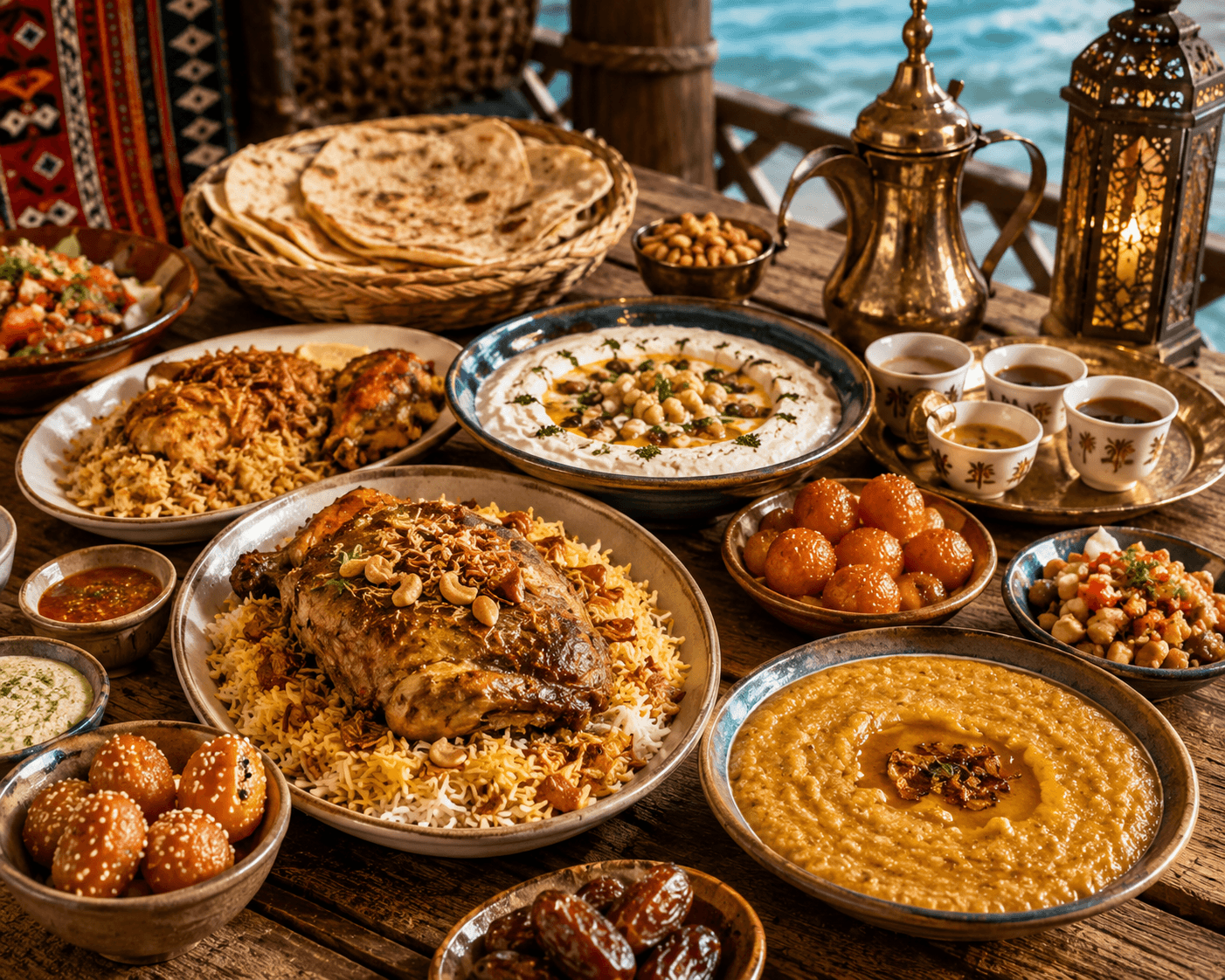
When looking for Traditional Emirati Dishes Every Visitor Should Taste, you must try Al Harees. This dish holds deep cultural meaning, combining whole wheat grains and meat. It is slow-cooked for several hours until it reaches a smooth, porridge-like consistency.
This dish is served during holy periods like Ramadan, weddings, and local festivals. Cooks finish it with a drizzle of local clarified butter. Another important choice is Al Majboos, a fragrant rice dish enjoyed across the Arabian Peninsula.
This dish features basmati rice cooked with lamb, chicken, or fish, spiced with cardamom, cloves, and cinnamon. The grains absorb the spiced broth during cooking, making it aromatic. People garnish it with fried onions, golden raisins, and split yellow chickpeas.
Saloona is a classic Emirati stew with a rich, tomato-based broth packed with seasonal vegetables and tender meat. This comforting meal is flexible, allowing households to use whatever fresh ingredients they have on hand.
| Dish Name | Key Ingredients | Flavor Profile |
|---|---|---|
| Al Harees | Whole wheat grains, meat, clarified butter | Rich, savory, porridge-like comfort food |
| Al Majboos | Basmati rice, meat or fish, cardamom, loomi | Aromatic, spiced, and savory |
| Saloona | Tomato broth, seasonal vegetables, meat | Tangy, warm, and comforting stew |
Sweet Traditional Emirati Dishes Every Visitor Should Taste
Emirati mornings and evenings center on sweet, spiced treats paired with strong, aromatic Arabic coffee. These traditional recipes highlight the historic presence of dates, saffron, and cardamom in the local ports. The sweet flavors reflect generations of desert life and trade.
Luqaimat stands out among the top Traditional Emirati Dishes Every Visitor Should Taste. These small, golden-brown dumplings are fried until they are crispy on the outside and soft on the inside.
Cooks coat these fried dumplings in rich date syrup and sprinkle them with toasted sesame seeds. They are best enjoyed fresh and hot. This provides a pleasant contrast of textures and natural sweetness.
Balaleet represents a sweet-and-savory breakfast combination that shows the culinary creativity of the region. It consists of thin vermicelli noodles sweetened with sugar, cardamom, and saffron. A thin, savory egg omelet sits on top.
Chbab is the local version of a pancake, flavored with saffron, cardamom, and yeast. These light pancakes are cooked until golden. People usually serve them with cream cheese and local honey.
How to Enjoy Traditional Emirati Dishes Every Visitor Should Taste
Savoring these dishes involves more than just tasting the food. It requires understanding the cultural etiquette of Middle Eastern dining. Emirati culture places a high value on generosity, hospitality, and respect for food.
Seeking out these meals rewards you with a clear look into Bedouin history and coastal culture. Sampling these authentic flavors connects you to the heritage of a nation built on hospitality.
Dining Etiquette for Traditional Emirati Dishes Every Visitor Should Taste
People share meals while sitting on the floor on woven carpets to emphasize community. Guests must accept food and drink with their right hand. Using the left hand is considered impolite.
Arabic coffee, known as Gahwa, is poured from a traditional pot called a Dallah into small cups called Finjan. The host will refill the cup continuously. Guests shake the cup from side to side to signal they are finished.
To ensure a respectful dining experience, travelers should keep these cultural guidelines in mind.
- Always use the right hand for eating, drinking, and passing communal platters.
- Remove footwear before stepping onto traditional low-dining carpets or floor cushions.
- Shake your small coffee cup gently from side to side when you do not wish to have a refill.


Comments are closed